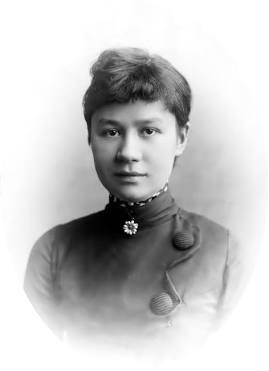
Johanna van Gogh-Bonger: The Visionary Who Made Vincent Famous
When the world gazes at the swirling cobalt skies of The Starry Night or the radiant yellows of Sunflowers, Vincent van Gogh is universally remembered as a lone, tragic genius. Yet, had history followed its expected course, his name would likely be forgotten in an attic in the Netherlands.
The painter who sold almost nothing in his lifetime owes his immortal fame not to luck, but to one determined woman: his sister-in-law, Johanna van Gogh-Bonger (known fondly as Jo).
A Sudden Tragedy and an Inherited Burden
In January 1891, twenty-eight-year-old Jo Bonger faced unimaginable loss. Just six months after Vincent took his own life in Auvers-sur-Oise, her husband, art dealer Theo van Gogh, died from late-stage syphilis.
Jo was left alone with their infant son, Vincent Willem, meager savings, and a flat packed wall-to-wall with hundreds of unappreciated canvases, drawings, and crates of correspondence.
Friends, art experts, and family advised her to discard or sell off the artworks for whatever scrap value they held. At the time, avant-garde Post-Impressionism was misunderstood, and critics dismissed Vincent as an untalented madman.
Instead of listening, Jo packed the entire collection, moved to Bussum, near Amsterdam, and opened a boarding house to keep food on the table. She hung Vincent’s vibrant, expressive paintings across her guest rooms and set out on a lifelong mission: to reveal Vincent’s genius to the world.
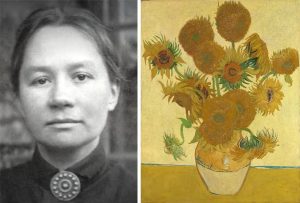
The Strategy Behind the Art
Jo Bonger was not an art dealer by trade, but she was a gifted scholar and linguist who had studied English literature. Her marketing strategy anticipated modern branding by decades:
-
Curating Scarcity: Rather than dumping the hundreds of canvases onto the market—which would crash their value—Jo retained ownership of the best pieces. She loaned works to prestigious galleries, placed them in select avant-garde group exhibitions, and cultivated relationships with influential art critics.
-
Pairing the Art with the Man: Jo recognized that Vincent’s work was inseparable from his humanity. She encouraged skeptical art critics, such as Jan Veth, to read Vincent’s letters alongside viewing his paintings, converting harsh critics into vocal advocates.
-
The 1905 Stedelijk Exhibition: By July 1905, Jo organized a solo retrospective of over 450 of Vincent’s works at Amsterdam’s Stedelijk Museum. It remains the largest Van Gogh exhibition ever mounted and solidified his stature across Europe.
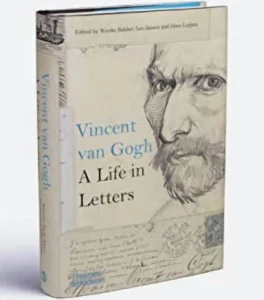
Publishing the Letters: Shaping the Narrative
Jo knew that the visual language of Vincent’s impasto brushstrokes became undeniably powerful once viewers understood his inner turmoil and profound spiritual drive. For over a decade, she painstakingly transcribed, edited, and arranged the massive correspondence between Vincent and Theo.
In 1914, she published the multi-volume Brieven aan zijn broeder (Letters to His Brother). The letters transformed the public’s perception almost overnight. Vincent was no longer seen as a chaotic eccentric; readers encountered an articulate, deeply philosophical, and sensitive man pouring his soul into art.
Later in life, Jo moved to New York and began translating the entire corpus into English, determined to introduce Vincent to the American audience.
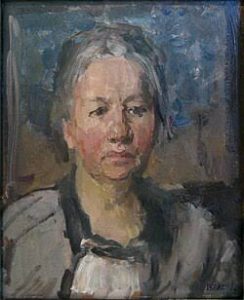
A Lasting Legacy
Johanna van Gogh-Bonger passed away in 1925, but the foundation she laid was unshakeable. Her son, Vincent Willem van Gogh, inherited the core family collection that his mother had safeguarded so fiercely. He eventually established the Van Gogh Foundation and co-founded the Van Gogh Museum in Amsterdam, which opened in 1973.
For generations, art history sidelined Jo as merely an administrative widow in the footnotes of genius. Today, researchers and historians celebrate her as a master promoter, an astute editor, and an essential figure in modern art history. Without Johanna van Gogh-Bonger, the world would never have seen the brilliance of Vincent van Gogh.
