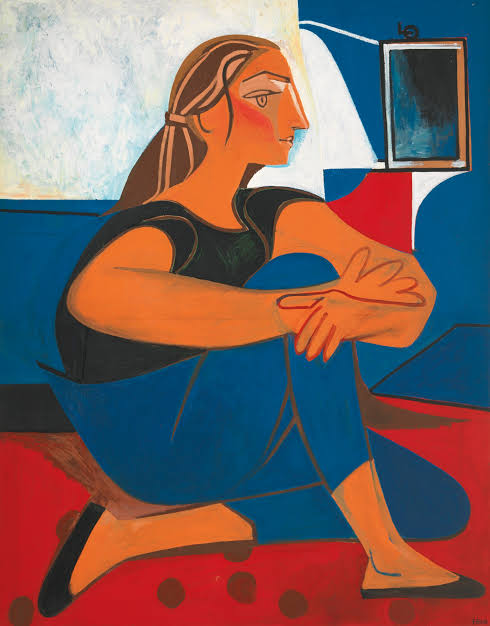
Françoise Gilot and her life after Picasso
In 1953, Françoise Gilot packed her bags, took her two young children, Claude and Paloma, and walked out on Pablo Picasso. In doing so, she accomplished something no other woman in his orbit ever had: she left on her own terms and survived intact. Picasso reportedly warned her that leaving him meant stepping directly into the desert. Instead, Gilot built one of the most vibrant, resilient, and prolific artistic lives of the twentieth century.
Defying the Blacklist
Picasso did not take rejection quietly. He used his immense clout across the French art world to isolate her, pressuring galleries, collectors, and critics to drop her work. For years, Paris treated her with cold indifference.
Yet Gilot refused to play the tragic muse. In 1964, she countered Picasso’s hostility with the pen, publishing her memoir, Life with Picasso. The book became an international bestseller. While Parisian cultural elites recoiled at her candor, the world met a razor-sharp intellect who dissected Picasso’s genius without excusing his cruelty.
Reinvention and Recognition Abroad
Shut out from traditional French avenues, Gilot looked across the Atlantic. The United States and the United Kingdom welcomed her without the weight of Parisian artistic feuds.
Her visual style deepened and evolved. Leaving behind the shadow of Cubism, Gilot embraced radiant color, structural rhythm, and mythological motifs. She worked across oils, watercolors, printmaking, and monotypes, eventually producing thousands of works. Her monumental floating canvas series, inspired by visits to India and Senegal, showcased a painter interested not in male ego or domestic containment, but in light, space, and architectural balance.
Her personal life mirrored this expansion:
-
Artistic renewal: She mounted solo exhibitions across New York, London, and California, earning gallery representation on the merits of her craft.
-
A singular partnership: In 1970, she married Dr. Jonas Salk, creator of the polio vaccine. Their marriage lasted until his death in 1995—a meeting of distinct minds rooted in mutual respect and creative autonomy.
-
Institutional acclaim: Major institutions, including the Metropolitan Museum of Art and the Centre Pompidou, acquired her work. In 1990, France awarded her the Legion of Honor, formally acknowledging the artist it had once tried to erase.
The Long Game
Gilot continued painting well into her late nineties from her studio in Manhattan’s Upper West Side, working every day with brush in hand. When she passed away in June 2023 at the age of 101, she left behind an oeuvre that spanned eight decades.
Françoise Gilot was often labeled “the woman who said no to Picasso,” but her real triumph was everything she said yes to afterward: creative freedom, reinvention, and a life lived entirely on her own canvas.

